
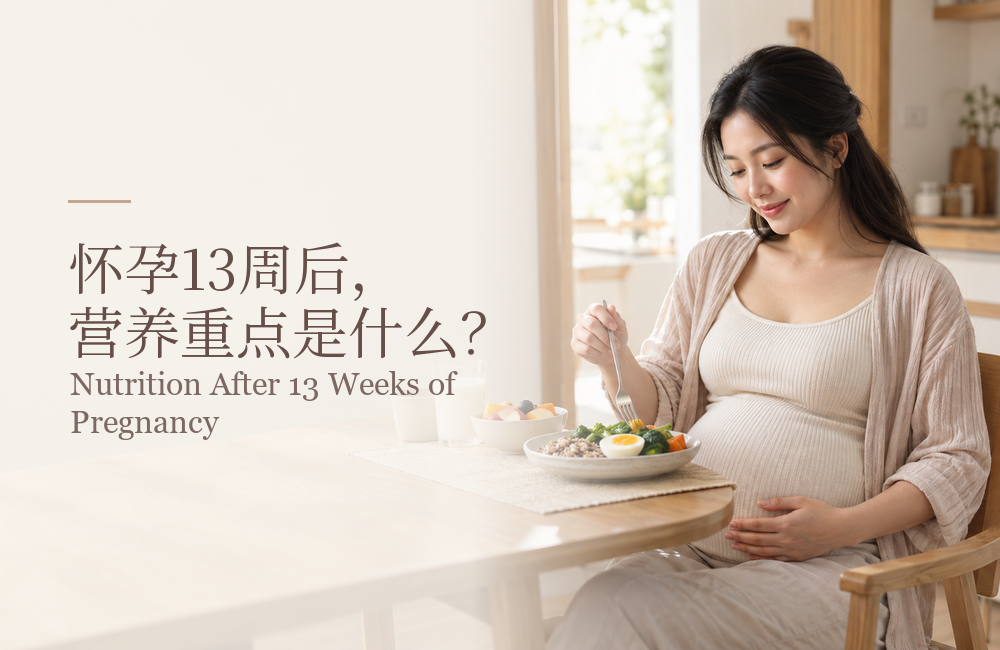

How Do Your Nutritional Needs Change After 13 Weeks of Pregnancy?
25 September 2026
After 13 weeks, as you enter the second trimester, some early pregnancy symptoms may begin to ease and your appetite may start to improve.
At the same time, your baby continues to grow, while your body is supporting changes in the placenta, blood volume, and other tissues.
This does not mean you need to “eat for two.” The focus should be on eating a balanced and nutrient-dense diet.
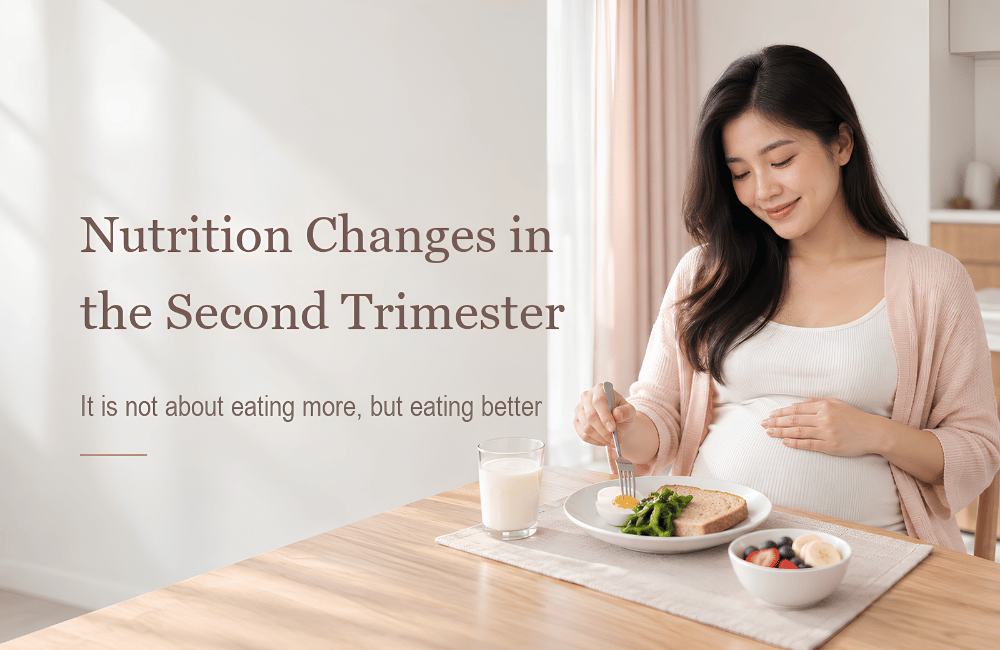
Protein Is an Important Part of Everyday Nutrition
As your baby continues to grow, getting enough protein through your daily diet becomes important.
Eggs, fish, chicken, lean meat, tofu, beans, milk, and dairy products are all common sources of protein.
You do not need large portions of meat at every meal. A varied diet that includes different protein sources together with vegetables, whole grains, and other foods is more important.
Iron Becomes Increasingly Important
During pregnancy, your body produces more blood, which increases its need for iron.
Not getting enough iron may increase the risk of iron deficiency and anaemia. WHO recommends iron and folic acid supplementation during pregnancy to help reduce these risks.
Lean meat, eggs, beans, and dark green vegetables can contribute dietary iron.
If your doctor has prescribed an iron supplement based on your blood results, follow the recommended dose rather than changing it according to what other mothers are taking.
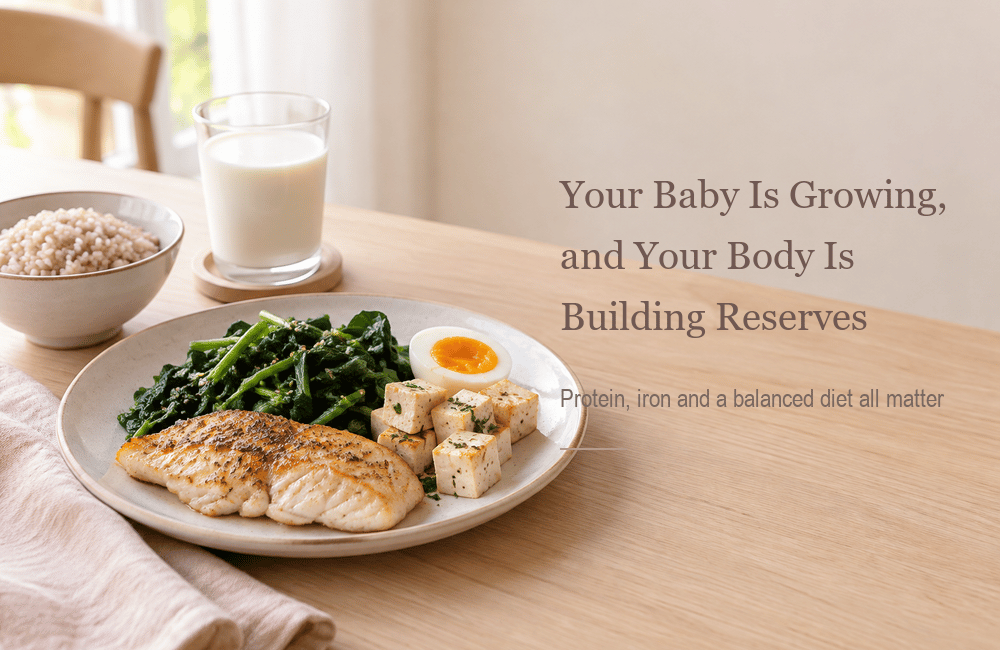
Calcium Still Matters
Calcium supports the development of your baby's bones and teeth, while also helping maintain your own bone health.
Milk, dairy products, tofu, and other calcium-containing foods can all form part of your daily diet.
If you rarely consume these foods because of dietary preferences, lactose intolerance, or other reasons, mention this during your antenatal visit so your doctor or dietitian can advise you appropriately.
Do You Stop Needing Folic Acid After 12 Weeks?
It is not quite that simple.
Folic acid is especially important before pregnancy and during early pregnancy for neural tube development. Some public health guidance recommends folic acid supplementation from before pregnancy until at least 12 weeks, while WHO's iron-folic acid recommendations include supplementation during pregnancy. Your own antenatal care team should advise you on the appropriate duration and dose.
In other words, 13 weeks is not a point where everything you needed before suddenly stops and an entirely new plan begins.
Nutritional needs continue to change throughout pregnancy.

Pregnancy Does Not Mean Taking Every Supplement
A balanced diet remains the foundation of pregnancy nutrition.
More supplements do not automatically mean better nutrition. Some vitamins can be harmful in excessive amounts. For example, NHS guidance advises pregnant women to avoid cod liver oil and supplements containing retinol, a form of vitamin A.
If you are already taking prenatal vitamins, iron, calcium, or other supplements, let your doctor know what you are using so that unnecessary duplication can be avoided.
A Reminder for Expectant Mothers
Entering the second trimester does not mean you suddenly need to eat much larger portions.
Instead, pay attention to whether your meals include regular sources of protein, enough vegetables and fruit, a varied diet, and any specific nutrients your doctor has recommended based on your check-ups.
Every pregnancy is different, so your supplement routine does not need to look exactly like someone else's.
Good pregnancy nutrition is not about taking more. It is about meeting the needs of both mother and baby appropriately.