


How Much Water Should Breastfeeding Mothers Drink?
28 September 2026
After entering the breastfeeding stage, mothers are not only caring for their babies, but their own bodies are also still recovering while continuing to produce breast milk. This makes adequate hydration especially important.
Many mothers wonder: Does drinking a lot more water help increase milk supply?
Actually, more is not always better. What matters most is keeping the body well hydrated and adjusting fluid intake according to thirst, weather, activity level, and diet.

Breastfeeding mothers generally need more fluids than usual, but the exact amount varies depending on individual needs, weather, activity level, and diet.
The simplest approach is not to keep counting how many glasses you have had, but to make sure your body is not dehydrated.
If the weather is hot, you are sweating more, or your activity level increases, you may need more fluids. Keeping a glass or bottle of water nearby can also make it easier to take a few sips while breastfeeding, pumping, eating, or resting, rather than drinking a large amount all at once.
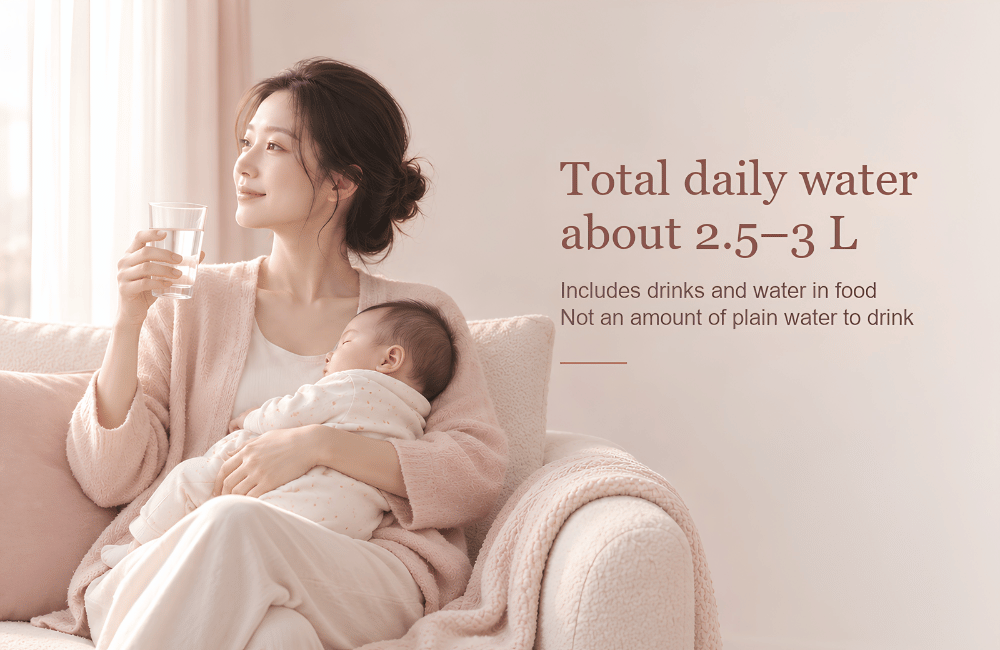
It is important to note that “total fluid intake” does not mean plain water alone.
Soups, other drinks, fruits, and the water naturally found in food all contribute to your daily fluid intake. There is no need to force yourself to drink large amounts of plain water just to reach a certain number.
Does drinking more water mean more breast milk?
Not necessarily.
Adequate hydration helps the body function normally, but if you are already well hydrated, drinking excessive amounts of water will not directly increase breast milk production.
Instead of focusing only on the number of glasses you drink, pay attention to signs that your body may need more fluids.
Strong thirst, a dry mouth, darker urine, less frequent urination, hot weather, or heavy sweating can all be signs that you may need to increase your fluid intake.
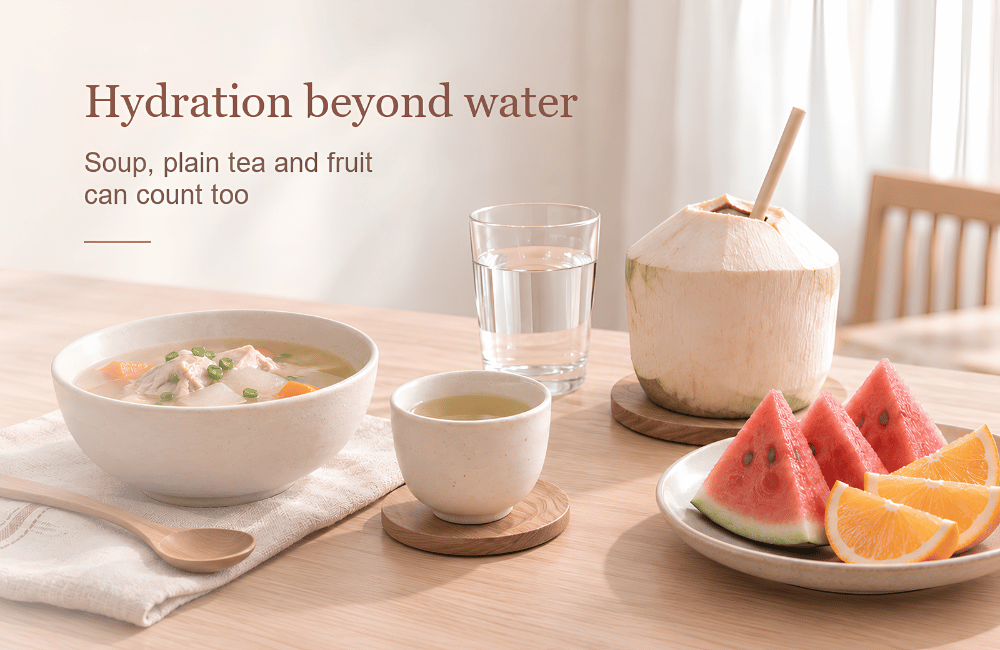
Plain water is not the only source of hydration.
Light soups, moderate amounts of tea, milk, coconut water, and fruits with a high water content can all contribute to your daily fluid intake.
However, drinks that are high in sugar should not be your main source of hydration. If you drink coffee, tea, or other caffeinated beverages, it is also best to avoid excessive intake.
Hydration during breastfeeding should not become a source of pressure.
Drinking small amounts regularly is often more comfortable than drinking a lot at once. You can take a few sips before or after breastfeeding or pumping, and increase your intake when the weather is hot or when you are sweating more.
If you experience persistent dry mouth, very dark urine, dizziness, noticeably reduced urination, or other discomfort, do not rely on drinking more water alone. Pay attention to your symptoms and seek medical advice when necessary.
Caring for your baby is important, but so is taking care of your own body.
Making hydration a natural part of your daily routine is already a good start.