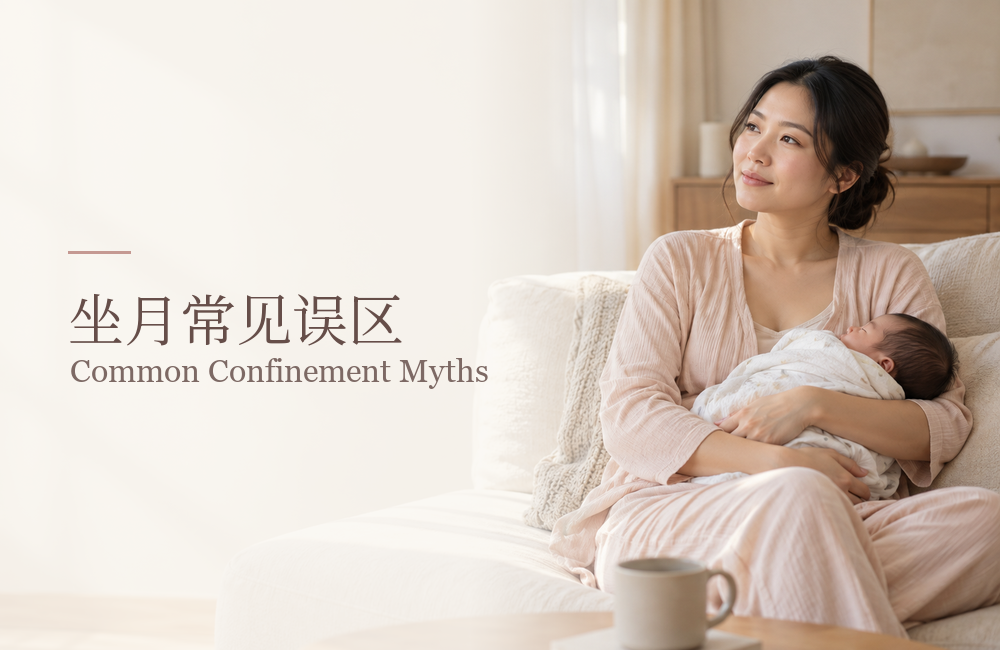
Common Confinement Myths|How Many Have You Heard?
28 September 2026
During the postpartum period, many mothers hear endless advice about what they “must do” and what they “must never do.”
Some of these practices come from long-standing care traditions, but some beliefs can become too rigid and may even make recovery more difficult.
The most important part of confinement is not following every rule without question, but understanding what your body is recovering from and what works best for you.
Here are 5 common confinement myths.
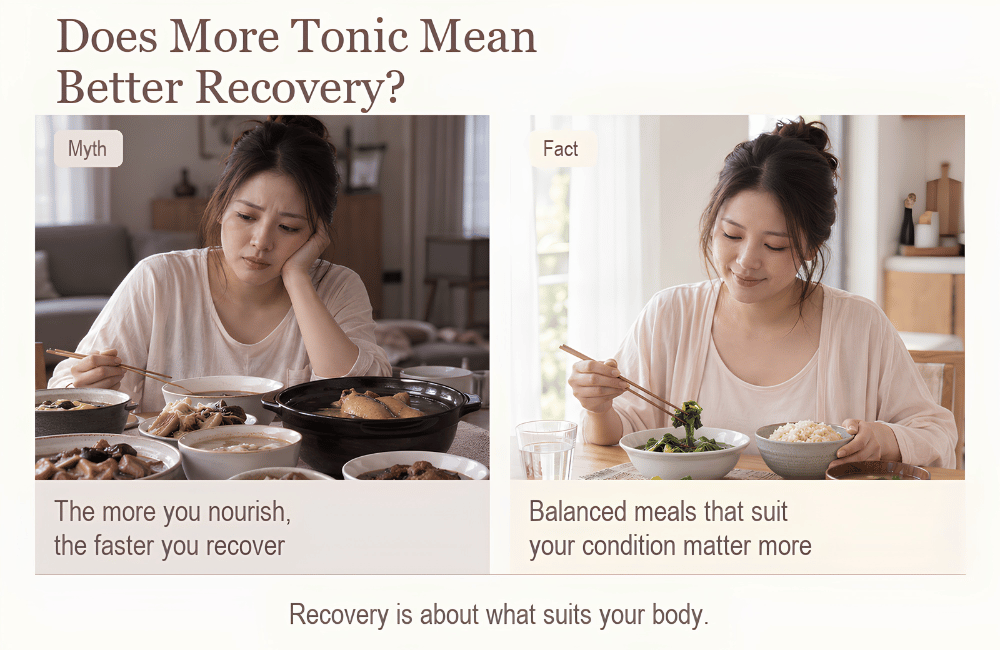
Myth 1|The more you “tonify,” the better you recover
Many people believe that after childbirth, a mother should immediately take as much nourishing food and tonic soup as possible.
Fact:
More is not always better.
What matters is the mother's physical condition, appetite, type of delivery, and stage of recovery.
In the early postpartum period, what matters more is:
- being able to eat comfortably
- digesting well
- getting balanced nutrition
- gradually rebuilding strength
If food is too rich, too oily, or too heavy too early, it may actually make a mother feel more uncomfortable.
Postpartum nourishment is not about taking in as much as possible, but about taking what suits your recovery.
Myth 2|You should avoid moving for the whole month
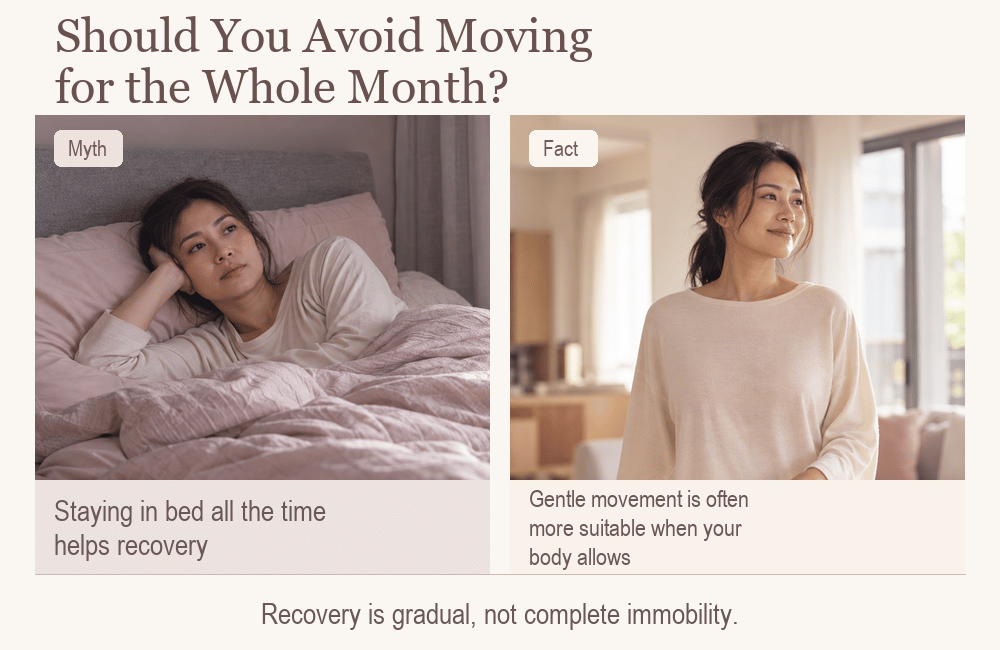
Some mothers are told to stay in bed as much as possible and avoid moving around.
Fact:
Postpartum recovery does not mean staying completely still for an entire month.
When the body allows, gentle movement, getting up gradually, and slowly returning to simple daily activities are often more appropriate than remaining in bed all the time.
Of course, mothers recovering from a caesarean birth, significant wound pain, or other complications should adjust activity according to their condition and medical advice.
The key is not “no movement at all,” but:
Do not force yourself, and do not stay completely inactive either.
Recovery is a gradual process.
Myth 3|The tighter the belly wrap, the faster the recovery
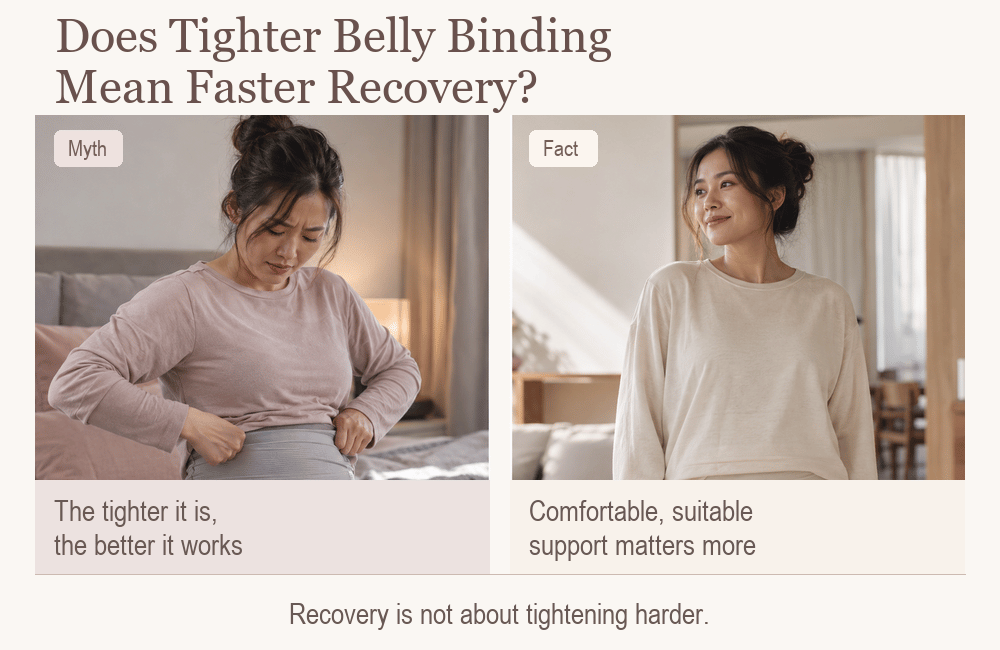
Many mothers think belly binding or abdominal support is the key to postpartum recovery, and that tighter is better.
Fact:
Tighter does not mean better.
Postpartum abdominal recovery involves more than appearance. It includes:
- the uterus gradually shrinking
- the abdominal wall slowly recovering
- the core muscles regaining strength
- the whole body rebuilding support and posture
If the wrap is too tight, it may become uncomfortable and affect breathing, eating, movement, and rest.
If abdominal support is used, the goal should be:
comfort, proper fit, and gentle support — not extreme tightness.
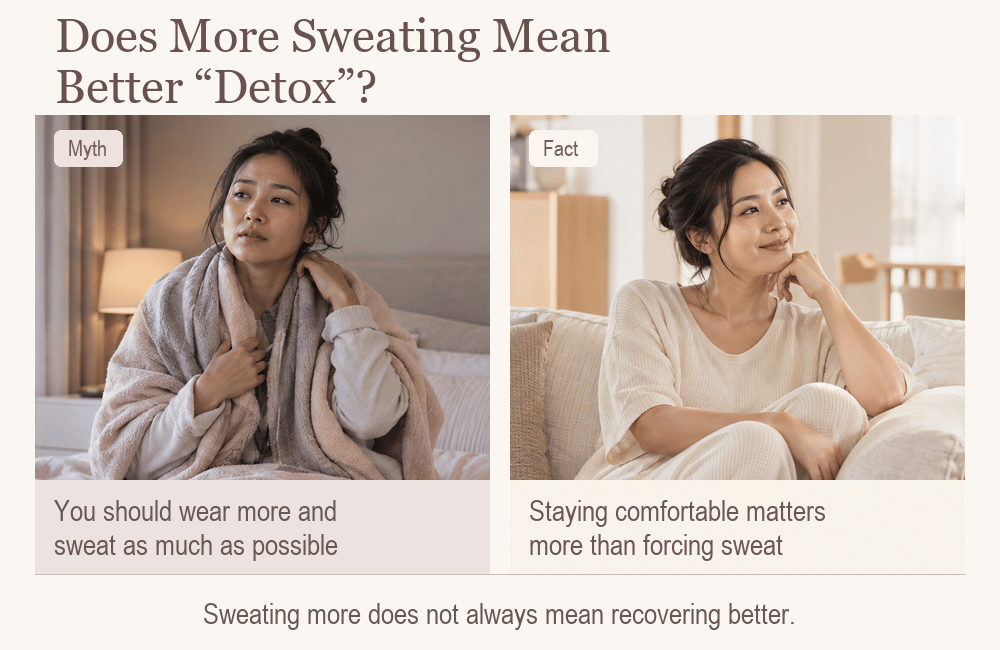
Myth 4|The more you sweat, the better your body is “detoxing”
Many mothers sweat more after childbirth.
Some people therefore believe that mothers should stay very warm and sweat as much as possible.
Fact:
It is common to sweat more after birth, but that does not mean you need to deliberately “force sweating.”
During pregnancy, the body stores extra fluid. After delivery, some of this fluid is gradually released, which is one reason postpartum sweating is common.
However, sweating itself does not mean “more detox is better.”
If a mother is overdressed, overheated, or kept in a very stuffy environment just to sweat more, she may actually become more uncomfortable and may increase the risk of dehydration or exhaustion.
What matters more is:
staying comfortable — not too hot, and not too cold.
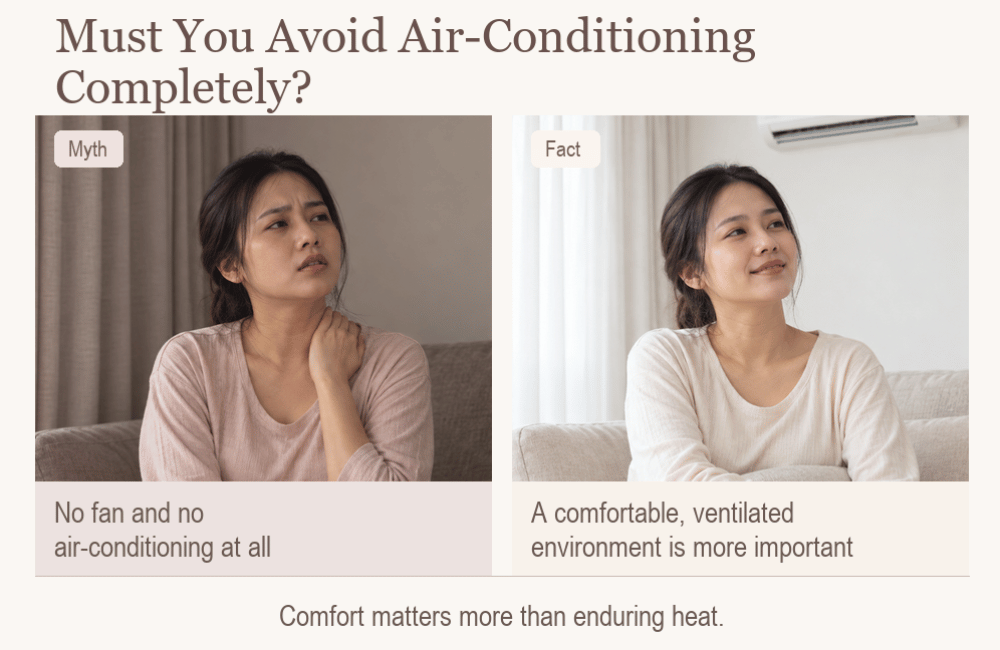
Myth 5|You must not use air-conditioning or a fan during confinement
This is especially common in hot climates.
Some mothers feel very hot and uncomfortable, but still avoid air-conditioning because they are told it will cause long-term problems.
Fact:
The key is not avoiding air-conditioning completely, but keeping the environment comfortable and avoiding becoming chilled.
If the weather is hot, using air-conditioning or a fan appropriately may help the mother feel more comfortable.
What matters is:
- avoiding cold air blowing directly on the body for long periods
- not setting the room too cold
- drying off and changing clothes after sweating
- keeping the space comfortable, clean, and well ventilated
Confinement is not about enduring discomfort. It is about helping the body recover in a comfortable environment.
A Reminder for Postpartum Mothers
There is no single confinement method that suits every mother in exactly the same way.
Each mother's body, delivery experience, wound condition, home environment, and recovery pace are different.
Instead of feeling pressured by what others say you “must” do, it is more helpful to pay attention to:
- how your body feels
- what helps you feel more comfortable
- when you may need advice from a doctor or healthcare professional
Good postpartum care is not about forcing yourself through a list of restrictions. It is about helping your body recover step by step.